Thirty-two years of law, with computer science beside it
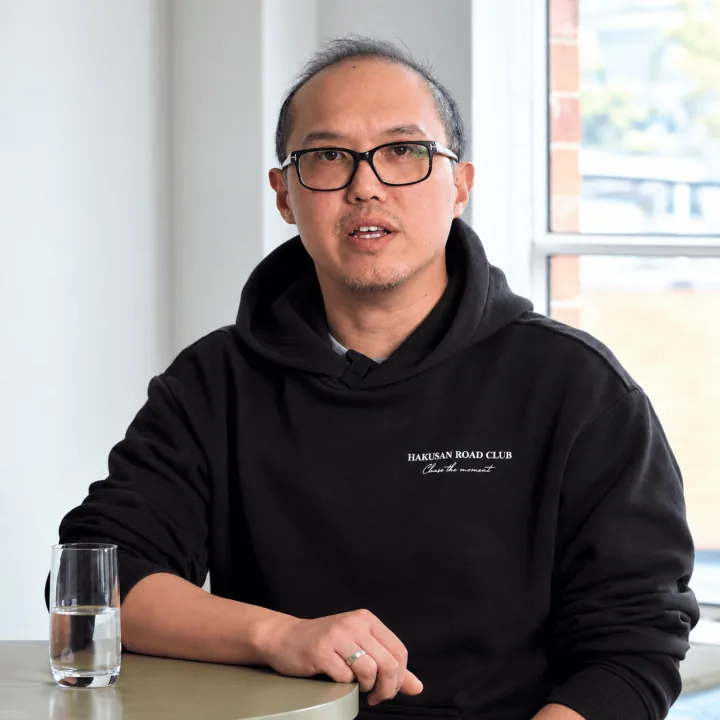
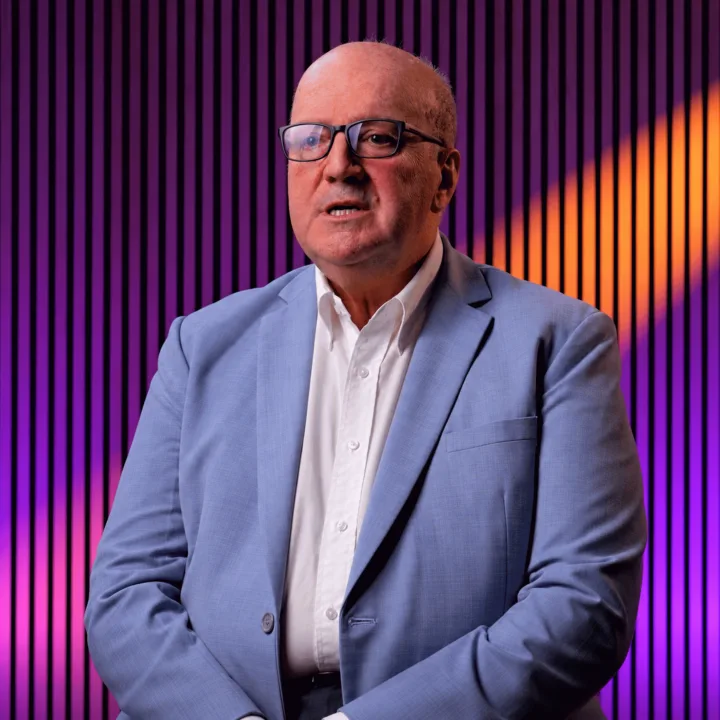
Anthony Autore's route into AI did not begin with the current wave of chat tools. He says he spent 32 years as a lawyer while also working in computer science and through universities.
He traces the technical thread back to 2008 at the University of Wollongong, where he was a student around an early corporate-law database that used symbolic AI. The shift he points to came later: transformers, then the public arrival of ChatGPT.
The challenges really began in early two thousand and eight when I was working at the University of Wollongong... They built the first corporate law database with some symbolic AI.
The company sits between AI and the work
AI Revolution 4 Technologies is the agentic AI engineering company Anthony formed around that background. In the interview, he describes a four-person deployment engineering team and a proposition centred on governance, control, security and data sovereignty.
The customer he has in mind is not an AI company. It is an organisation that wants to adopt AI but does not yet know where it belongs in the operation.
Our clients are people or organisations that want to adopt AI. Now everyone wants to adopt AI, but no one knows what to do.
The product is not the starting point
Anthony is wary of treating AI as a package that can be opened and applied everywhere. His first customer step is an audit: examine the operation, find the work that is suitable for AI and leave the rest alone.
That means mundane, repeatable tasks may be selected while work that depends on judgement remains with people. Only then does his team apply AI with the customer.
It may only need tasks for certain mundane things, but we do a full audit, and then we apply the AI judiciously, and then we work with the customer.
A morning briefing built overnight
Anthony also describes how the approach operates inside his own business. Role-based agents research active development projects overnight. At 8:00 am, the system produces a morning briefing. The agents divide the workload, pass research to the engineering team and support the move from research into code.
The interview names computer vision and drone technology among the active project areas. Anthony says the team builds in Python and is moving towards a Rust-based system.
Each agent has a specific role. We have the morning briefing that's produced at eight o'clock for me by the computer.
Humans stay in control
Automation is not the end state Anthony describes. His governance model keeps a human supervisor in the loop to control the system and take responsibility for decisions.
The intended change is in the quality of the person's work: less time on the mundane layer, more capacity for higher-value judgement.
We still have humans in the loop because all of our governance and controls require a human to supervise and to control.
Pathfinder turned exposure into momentum
Anthony entered SMEC AI Pathfinder without expecting the exposure he received. He says the program gave the business a reason to move beyond research and helped connect him with other businesses.
On the day of the interview, he pointed to two people waiting outside who wanted to explore using his technology. He framed the value simply: make connections and share knowledge.
I think the introduction is the connection to other businesses... So why not? Let's network and share the knowledge.
The infrastructure is still the next step
Anthony is explicit about what has not happened yet. Funding, access to compute and links with data centres remain future steps. He sees those pieces completing a loop between his software, the infrastructure that processes the work and the value returned to the client.
That distinction matters. The company has a technical direction and an operating method; the infrastructure needed to scale it is still being assembled.
Next is to really secure some funding... Once we do that, then we're going to be linking with data centres.