A name that says what it does
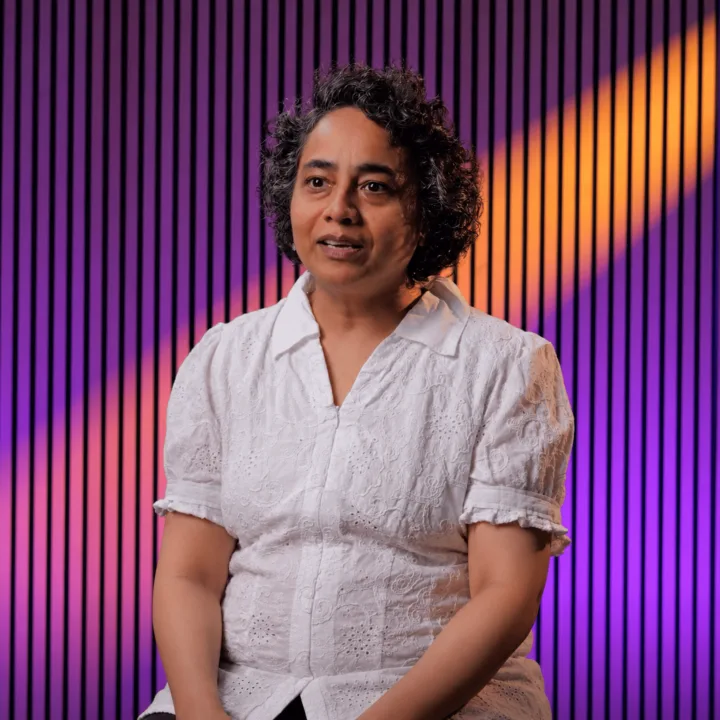
Vividhata is a diversity and inclusion business: training, consulting and technology. The name is the brief. It is also, in Arti Agrawal's words, a social enterprise.
My name is Arti, and my business is called Vividhata, which means diversity in Sanskrit, and it's also a social enterprise.
Where physics meets inclusion
Arti is a physicist by background. Diversity and physics sound like an odd pair, and she says so herself. The link, for her, is technology.
Work has gone digital, remote and hybrid. Her question follows from that: "So how can we use tech to make the workplaces fairer and better?"
It comes together because we can use technology to improve what's going on in the world.
The message that needs a second look
The first answer is a misogyny checker, with AI as its core engine. People exchange messages on workplace chat. When one of those messages is rude or sexist, the checker tells the person who sent it that it is sexist, how severe it is, and why.
The aim is education.
Shown as a prototype, it has landed well. "The accuracy is great, so they're excited about it," she says.
So it's improving workplace communication one conversation at a time through education, right?
Standing in someone else's shoes
The second product is still in development: virtual reality coupled with AI, for training on situations like bystander intervention or a difficult customer. The idea is that the learner can swap bodies.
You could be the customer, or you could be the employee who's dealing with the customer.
Built for sectors with a diversity problem
Vividhata's customers come from industries where diversity is a known problem. Arti names construction, tech, government departments, small to medium enterprises and professional bodies.
And our customers tend to be from industries where they have a problem around diversity.
AI does the work. Judgement still matters
Day to day, Arti uses AI for more conventional jobs too: summarising documents and writing emails. It saves her time. But she is wary of people who use it "a little bit randomly".
AI is gonna do the work. You still need the expertise to see if the work it's produced is any good, and you need to be able to tell it what to do.
Ideas from the rest of the cohort
Arti came into Pathfinder unsure how she would use AI. Part of what changed that was the room.
I think talking to other people who are part of the program has been helpful because they're doing so many different sorts of things. It makes you think and gives you ideas.