An ABN in one hand
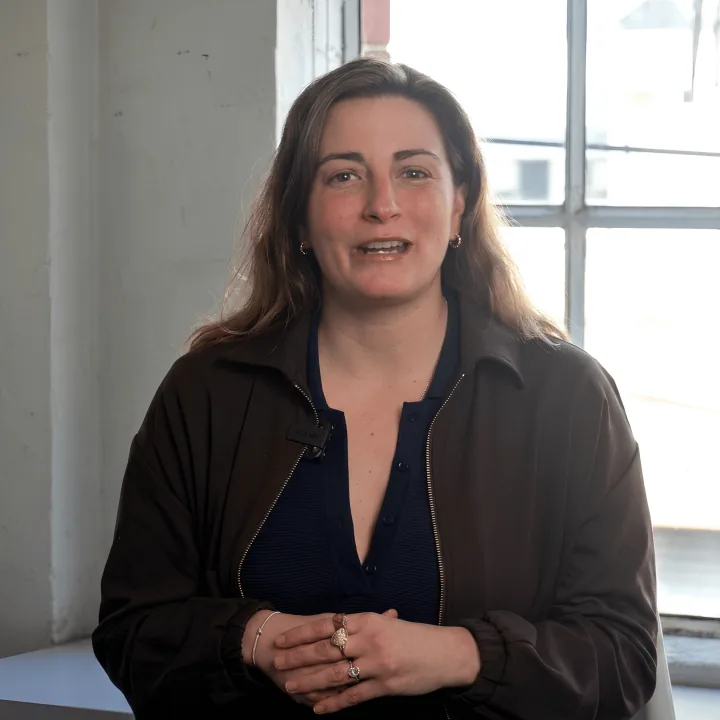
Ekaterina Loy runs Peerless Education, a social enterprise in South Australia that works mainly with culturally diverse audiences. She is, in her words, "a first-time founder". Before AI Pathfinder she was still working out how to start her own business, and the help on offer was mostly aimed at small businesses.
Before joining that program, I was mainly exploring starting my own business, so like ABN in one hand, idea in the other hand, and it was mostly the small business development programs that were available to me.
Startup world thinks big
AI Pathfinder put her in a different room. She says it "really kind of expanded my perspective because startup world thinks big". It also gave her a way in: the program "really helped me enter the startup ecosystem", which for her is the South Australian one.
Her business has "changed a lot" since. She credits Amir Nissen, SMEC AI's Head of Programs, with one lesson in particular.
It was actually Amir who taught me how to pivot and when is it necessary.
Running to stay in place
She came to AI out of curiosity rather than a specific problem. Once she started, it became a constant effort to keep up, which she likens to "a Red Queen rule, you know, where you have to run so fast to just stay in the same place."
I started exploring AI because it was a new and exciting thing at the time, and I was really curious about it.
A human in the loop
Peerless Education works closely with communities, and that shapes how she uses AI. She keeps a person in the loop, and uses AI for the work behind the scenes: "the grant applications, the reports framework, or just simply breaking down some steps". As a first-time founder, she says, "I like the clarity of that." She also uses it to "vibe code my prototypes".
My business is a social enterprise, so because of that, I prefer the human-in-the-loop framework. So I interact a lot with members of the community, but I use AI for a variety of things.
An app for soft skills
Those prototypes point to her next product. She is developing an app that tracks soft skills, built for any audience rather than one community. In her words, it "is useful for extracurriculars or professional development tracking."
Currently I'm developing an app that is appropriate for any audience members, so we can work with young professionals or with high school students.
A community, not a competition
The program also changed how she sees other founders. One lesson from Amir stayed with her: not being "afraid of your competition". She still uses "a lot of things that I learned during the Pathfinder program".
I think that particularly changed the attitude in which I view other founders. It's never a competition. It's a community. It's an ecosystem.
What comes next
Peerless Education is turning outward. The plan is a Social Impact Book Club and workshops for the community, which she calls "community-facing initiatives".
We're launching a number of things, like the Social Impact Book Club, and also the workshops for the community.