Twenty years of other people's products
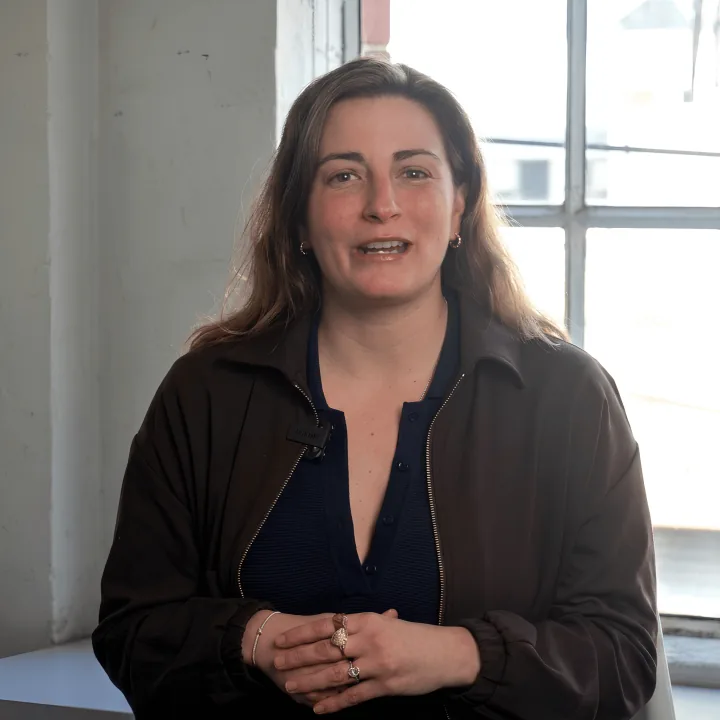
Emily Hendley has been working in tech for more than 20 years. She started out in London as a business analyst, moved across to Sydney for contracting and consulting work, and eventually landed in product, where, as she puts it, she was able to define the requirements instead of just listing them.
The itch to build something of her own never went away.
I've spent my whole career working on other people's products and wanted to build something from scratch.
The work nobody owns
The problem Emily chose is one every product team recognises. Competitor intelligence matters, but it rarely has an owner. Information arrives haphazardly: someone spots a competitor announcement, shares it in a channel, and the thread goes cold.
Knowsey is her answer: a competitor intelligence copilot that automates the work end-to-end. It sends automated briefs on a regular schedule, tuned to the interests of an executive team or a product team, and pairs them with guided recommendations based on the context a customer chooses to share, such as their roadmap, vision or strategy.
The name is part of the pitch: you're Knowsey about your competitors. But the substance is the compounding value of doing the work continuously rather than as a point-in-time Google search.
Is anyone owning competitor intelligence internally? And if so, are they doing it well? That's where the platform really comes into play: that historical learning and insights over time.
Why not just prompt a chatbot?
Emily is direct about the alternative, because it already exists. Anyone can run their own competitor analysis with a general-purpose AI assistant.
"You can use Copilot, you can use Claude for querying and doing your own competitor analysis in your own time," she says. "But it's extremely manual, and you'll spend hours creating your own skill or prompting, learning to make your own agent."
Knowsey automates that instead. Language models review the information gathered from competitor websites, and AI does the looking as well as the reading: it hunts for new competitors the customer would not have known to search for.
From "all product managers" to a beachhead
When Emily joined the SMEC AI Pathfinder program, her ideal customer was any product manager, anywhere. She now describes that as extremely vague.
During the program, participants submitted their ideal customer profile and unique selling proposition for direct feedback, and Emily went through a few iterations to nail hers. The result was a deliberate beachhead: fintech product managers first, because two decades in fintech product roles made that segment the one she knows and loves, with other product managers and go-to-market teams to follow.
The course actually really helped me to choose. I'm starting with fintech product managers because that's really my bread and butter.
Distribution before the product sells itself
The program's second big push was on distribution. As a product person, Emily's instinct was to make the product as good as possible and assume it would sell itself. "Which of course it wouldn't," she says now.
Thinking about distribution channels upfront changed her plans, including a channel she had personally written off: founder-led social media content. "I would cringe when I think of putting a camera up to my face," she admits. Reframing it as a distribution channel, something you do to help the product rather than yourself, was one of her biggest takeaways.
The Thursday evening sessions had a compounding benefit: a cohort of founders hitting the same walls at the same time. Emily still works with several of them offline, trading feedback on each other's products as they head to market.
Even with 20 years' experience in tech and a product background, I still took away a lot from the program. Everyone can learn something from it.
A beta built from communities
Emily's proudest milestone from the program period is concrete: Knowsey is close to production-ready, and 20 to 30 product people have already signed up for the beta, recruited through product communities such as Mind the Product and The Hustle Badger.
She is still open to a few more. Product and go-to-market teams struggling with competitor intelligence, in fintech or beyond, get free use of the platform for a while in exchange for real feedback. Slack and Teams integrations are on the roadmap so intelligence can be shared and discussed where teams already work.
Emily uses Knowsey on Knowsey, watching her own competitors with the platform she built to watch everyone else's.