A disappointment that became a business
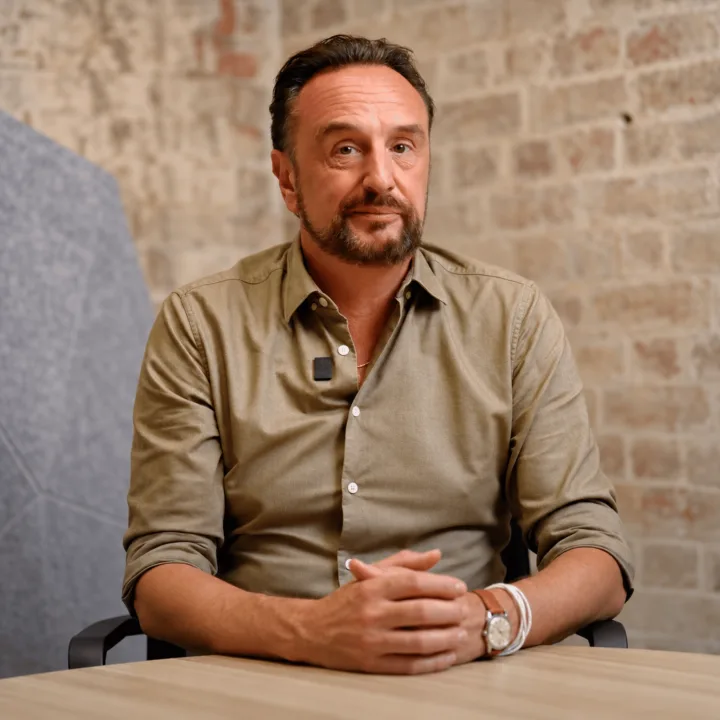
Francesco Presacco came to Australia from Italy 28 years ago to study, and stayed. About ten years ago, visiting friends back home who work in recycling, he learned that much of what reaches recycling never gets recycled. It ends up in landfill anyway.
There's gonna be a better way to, you know, to dispose or to reuse resources that we have.
From a home office to supermarket shelves
After a couple of years researching and sourcing products from Europe, Asia and North America, he and his wife launched Biocasa, a direct-to-consumer business, from home in Melbourne in April 2020.
Their focus then moved to supermarkets, where packaging has the most everyday use. Today BioGroup works with a supermarket group in Adelaide, changing in-store packaging section by section, from cling wrap to the sheets that protect meat, for compostable alternatives.
Takes time. It's not an overnight thing. You need to change the operators, how they work.
Three currencies on one sheet of paper
Supermarket volumes changed the business. Pallets became containers, and with them came manufacturing lead times, shipping times, foreign exchange and payment terms.
His example is the deli paper. It is made from bagasse, an offshoot of sugarcane, milled into paper in one country, coated in another, then shipped to Australia, with costs paid in three currencies along the way.
So you got three different currencies that we have to manage. One is the local, so that's an easy one to manage. But the other one, there is a foreign exchange risk.
Make or break
With only Francesco and his wife in the business, the stakes were plain: the extra risk landed straight on cash flow. That was when he saw that SMEC AI was running an AI course.
I thought perhaps that's something that can help us, the business, navigate this complexity.
A platform for the risk
In AI Pathfinder, Francesco, who counts himself on the commercial, business-minded side rather than the technical one, built a platform for foreign exchange and logistics. He called it Biologic, “to stay in line with BioGroup and Biocasa”.
It helps him judge when to buy US dollars ahead of a coming shipment, and how to hold “minimum viable stock”: enough to supply the supermarkets, without capital sitting idle in the warehouse.
What AI is helping us is managing the financial risk.
Start here, end somewhere better
The program also changed how he got there. He started with one set of templates and structures, and the course told him early that it was not the right one. He changed it, then changed it again. He also saw others in the cohort trying and adjusting, and he still keeps in contact with a couple of them.
So I think what I get out of the course was the fact that you start here, but you ended up in something different, but you got a trajectory and helped me understand the different systems that are out there and how they work together.