Two decades of models
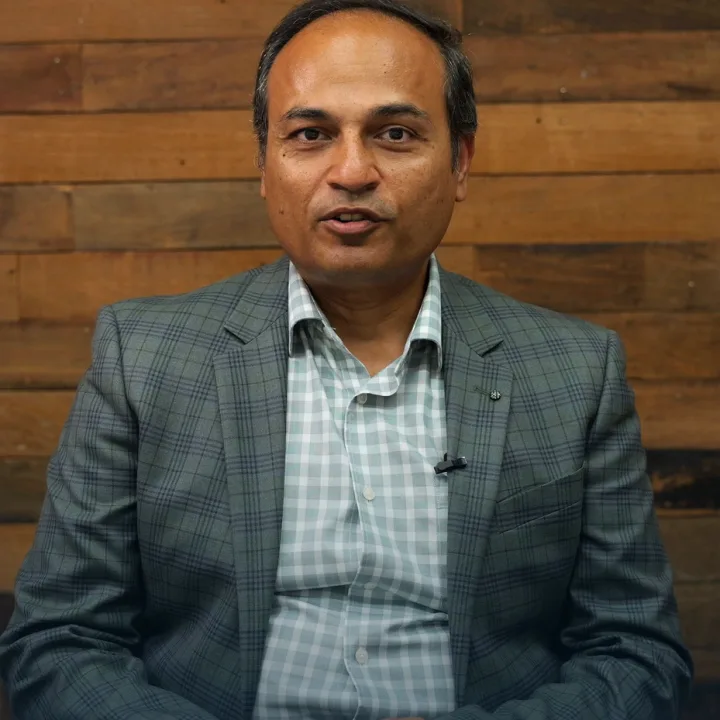
Gaurav Singh has spent more than twenty years building algorithms for industry. Before he founded Decisions 360 in Perth, he worked at CSIRO and BHP.
Today the company offers "high-performance algorithms, decision-making models" to companies in mining, supply chains and logistics.
Prior to this, I was a senior leader in CSIRO and BHP, where I led the capability… and now I run my own consulting to help out even more wider industries.
Good answers, left on the shelf
Those years taught him that a better model is not the hard part. Getting someone to act on it is.
That gap is in the company's name. He is "very passionate about decision sciences and getting value from data", and that value only arrives when someone acts: it "happens through decisions and actually implementing them, hence the company Decisions 360."
What I have learned that some very deep mathematical models will provide some really good recommendations to our clients and customers, but it never gets implemented.
Opening the black box
His answer is a model that explains itself.
“And what we therefore provide here is, how can I make that complex model to be more explainable, more easy to understand for our clients and users, so it does not come out as a black box? It rather comes out something they understand, and they can relate to it.”
AI is part of that, but not the whole of it. "AI really for us is not a one-fit-all type solution," he says. Its value for Decisions 360 is in explainability: years of solving hard maths problems, coupled with "the explainability element of AI".
And at the end, what it helps is that it makes the solution more trustworthy. It makes it more explainable, and therefore, our users don't see them as black boxes.
One model, many readers
The same recommendation has to make sense to very different people. AI helps the company "translate those complex things into various personas": "a chief marketing officer", "a simple planning officer" or "a very technical optimisation specialist".
What each of them gets is the reason, not just the answer.
They understand the why the optimised solution actually gave that recommendation, not just saying, "Here's a recommendation. Here's a prescription. Just go follow it." Question comes why, and that allows them to then implement it and get value from it.
Plug in, pay for what you use
Gaurav describes Decisions 360 as "a consulting company". Its solutions reach clients through its platform, Algobotics, and are built to fit around what a business already runs. Clients "don't have to change their existing systems".
AI also speeds up the building. "The speed of how we can deploy and how can we build certain of these solutions" is, he says, "one part of AI that has certainly helped". And the delivery stays simple: "our clients can even use Excel and use those solutions."
They can simply plug and play and use our decision intelligence as and when they want and only pay for what they use.
Trust before autonomy
He sees decision-making as where AI will matter most. Handing decisions over to it is a different step.
So the work ahead, as he puts it, is making AI's decisions "more governable, more trustable, and hence also explainable and easy to understand."
But to take that leap of faith of letting AI do those decisions comes naturally challenges. It comes about accountability. It's about trust. It's about can you actually still feel that it's doing the right thing? Can you govern it properly?
A first-time founder finds his forums
Decisions 360 is his first company. "This is my first experience as being an entrepreneur," he says. "I don't know if I can still call myself, but definitely we have founded a company…"
AI Pathfinder gave him the founder's questions to work through.
“What should we be thinking about as a founder? What should I see in terms of guardrails or what processes I need to be following? That was extremely useful and valuable to go through that journey.”
It also gave him a room to test ideas in, and other founders to learn from. Seeing "the huge different amount of applications of AI that every individual is thinking about" was, he says, "absolutely fascinating".
…it was extremely valuable to understand your customer, see what I should be thinking about, testing these ideas in those forums, meeting people, and bouncing ideas.