A crash, then a diagnosis
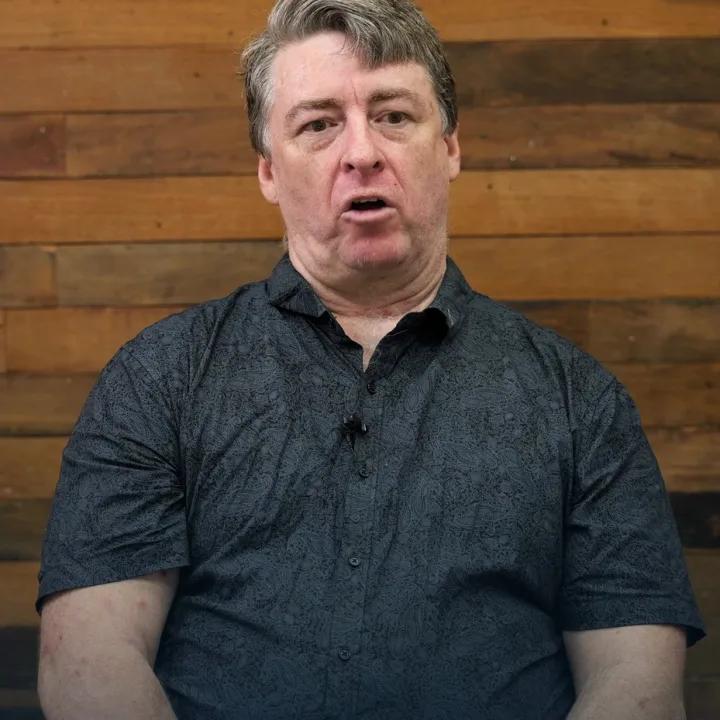
James Armstrong calls his background "a mixed bag". A few years ago, a motorbike accident "just totally changed my life", he says. He could not go back to the work he used to do.
Then came a diagnosis. His GP and psychologist told him he has ADHD, and that "reframed everything in my past".
And I started looking at things differently and realised there was a lot of pain points that I was experiencing that I didn't realise previously, but now I did know what they were about, and I started reframing how I dealt with those.
"Brain just said, 'Nope'"
His first fix was small: a plain Python program that showed his calendar and his tasks. It told him what to do. It did not get him doing it.
So he set out to build a full program that deals with all of those pain points together, "because they're all connected, like our brain is connected."
And first, I started just with a plain Python program that showed my calendar and tasks that I needed to do, but still I sat there and looked at it and just went, "Yeah, that's great. Not doing anything. Not doing it." Brain just said, "Nope."
The manual nobody handed out
NeuroRythm is his answer: a productivity system built by someone with ADHD, for ADHD brains. The way James tells it, most of us were handed a manual for one kind of brain and told to fit it. The cost of not fitting is a voice in your own head.
“And everyone will just sit there and go, "What's wrong with you? Why can't you just do it? Why can't you focus?…" And it was like that created our internal critic that is just brutal.”
Plenty of apps say they work with the ADHD brain. Most, he says, are "just slapping on a task scheduler or some pretty little gadget that just doesn't cut it". NeuroRythm is meant to work with the brain instead.
Even the name makes the point. The missing h is deliberate: "I spelled rhythm wrong because we dance to a different rhythm."
And NeuroRythm is about working with our brain and helping us know our brain and be able to actually working in conjunction with it rather than fighting against it all the time.
"I can't code"
James had no way to build it by hand. "I couldn't write a line of code to save my life," he says. When OpenAI first opened access, he applied, and was surprised to get in, "'cause I'm just single dad and a writer".
He now works as the conductor, not the coder. He orchestrates "multiple AIs as well as eighteen agents that I've built custom with AI", and the agents are there to keep the models in check, because the AIs "do drift a lot".
So that's what led me to AI is like hiring someone that can do what I can't, and then I'm just managing it and orchestrating it.
Past the vibe-coding ceiling
He tried vibe-coding platforms early, "before it even was a buzzword". They hit a ceiling fast: fine for "a basic copycat app", but not for anything outside of that. So he moved to his own models, run locally and through APIs.
He calls his set-up "AI agnostic". Any language model he puts into his development environment picks up his rules and the agents that guide it, and some steps stop until he signs off.
Like there's roadblocks, like it'll do something that has to stop and wait for my approval before I go further. And that's really the benefit that I've found with AI.
Built to fit the user
Most productivity apps ask every user to work their way. James wants the software to do the adjusting.
“…you can mould the program to an individual user using AI. Rather than trying to make all the users fit a specific model…”
The site promises that any AI features will be opt-in, and that what the app tracks stays on the user's own machine. He puts it plainly.
The users are more important to me. Your data stays local as well. So I don't take your data. I don't use your data, don't train on your data, nothing like that. Your data is protected. That's really important to me.
Out of the bubble
Building alone has a cost. As a solo founder, he says, "you're in your bubble". Pathfinder connected him with other people building with AI, and with their challenges as well as his own.
It also led to his next step: a "small business enterprise course", which he is doing now.
Just making those connections with other people that were building with AI was really beneficial, and you can continue connecting with them on LinkedIn and keep in touch with each other, which was good.