An architect who wanted to build
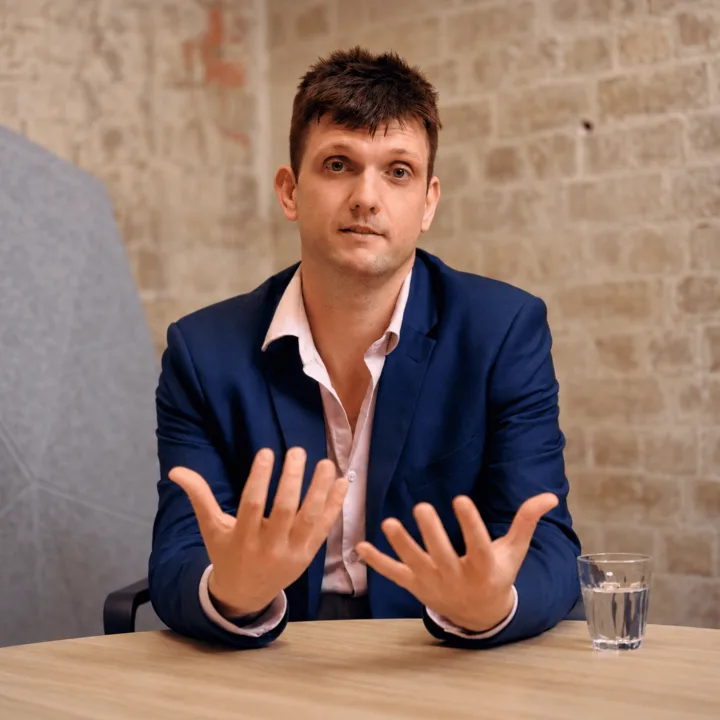
Jesse Davies is a solution architect in Adelaide. He contracts out to government agencies and startups, helping them put AI to work: "kind of any AI solution that they want, or data engineering, or any kind of AI development really."
So I've been a solution architect for seventeen years, and I set up Agentic Labs to be able to help people learn AI as well as being able to implement some cool solutions.
Where the months went
He decided to build out his own skills in AI, and set time aside to do it properly. He took out a subscription to an AI coding tool and started building.
He worked to the limits of the tool, "setting alarms every five hours when I'd hit my little usage caps". Then the building turned outward: "I would just keep building and keep building and keep building and that's… then I just started doing it for other people."
So I went in there and got my Claude Code subscription, started just building out stuff. And then, by the end of it, six months had gone.
Standing up a solution
Asked about results, he does not reach for a number. "That's a hard one," he says. What he describes instead is the work: hands-on AI engineering, and helping founders get from an idea to something real.
He sees AI changing the work of a solution architect. It lets you "develop at scale", he says, and "push boundaries as far as the technology and the actual impact that you can make to the broader community."
I guess mainly what I focus on is a lot of the AI engineering and development, so being able to go in there and actually stand up a solution or helping founders be able to take their dream and actually turn it into something of substance.
A solo founder for the first time
He came to AI Pathfinder with a plan of his own, "going there with my startup idea". He had been part of startups before, but never on his own.
I've worked on multiple startups before, just as co-founder. This was my first time going in there as a solo founder.
Out the window
The plan did not survive the program. Partway through, he realised he would rather support the other founders and help them build than push his own startup.
He puts it more plainly later in the interview: "My passion isn't for driving my own startup. It's for helping others."
I had ideas about what I wanted to be able to progress and do, and then that got basically just thrown out the window when I realised that I… rather, I guess, supporting other founders and actually being able to help them build out, not as a co-founder…
From breakout rooms to demoing
Group sessions were not his natural setting. "I went in there thinking that I don't usually do this kind of thing," he says. The first breakout rooms left him wondering what he was doing there.
The room helped. He describes "a really good mix of people with different backgrounds": founders as technical as he is, and others who were "very green in the founding space". His summary: "we learn off each other."
But it grew on me, and by the end of the program I was actively participating, demoing and really engaged.
A different path
He came in to build his own startup. He left with a clearer idea of the work he wants to do, and he credits the program with what came next.
I mean, the best thing about the SMEC AI Pathfinder program was it led me to basically my dream career and a position at Supabase.