An economist among regional businesses
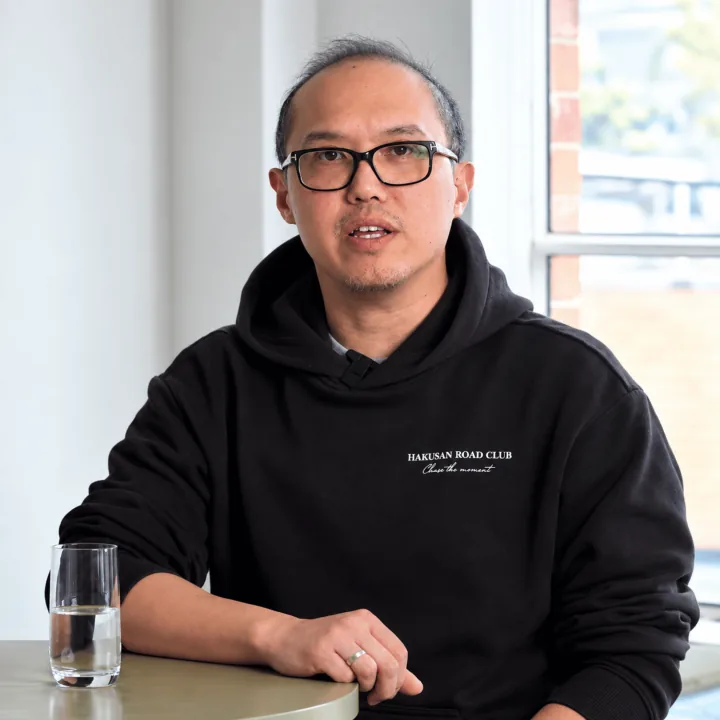
Robin Moyer has a background in economics. He lives in Uraidla, in the Adelaide Hills, and runs an advisory practice for regional businesses across South Australia. He also mentors small businesses through a regional mentoring program.
That work put him in front of a lot of farms.
I run an advisory business focusing on regional businesses, and through that I've really got to meet a whole bunch of different regional businesses, including a lot of agribusiness, and that's sort of where we've kicked off with our project.
A glut of data on the way
The first idea came from the sensors. Farmers were being pitched moisture sensors, spore traps and connected machinery, and each one would add data they had never had to manage before. YieldIQ set out to bring it together. The team started, he says, "prior to AI being where it is now".
So we first understood that there was gonna be a glut of data for farmers… so things like moisture sensors and spore traps and even the data that comes from the machinery themselves…
The research said someone got there first
In AI Pathfinder, the work started with the idea, not the technology. The team sized the market and interviewed the people they hoped to serve.
The research turned up an incumbent that already brought farm sensor data together. Rather than build a second one, YieldIQ pivoted.
…helping us understand how to go through the process of validating an idea through understanding the market size, doing customer interviews to really get that problem-market fit is the sort of lingo around it, and making sure that we were building something that people needed.
A farmer with an adjacent problem
Through his mentoring, he met a farmer whose problem sat next door to the original idea. It was not sensor data. It was the farm's financial management, spread across its core systems, and the hours it took to pull together.
The client that we're working with was spending a large portion of his week on forecasting and bringing data together in a very sort of ad hoc kind of way.
One view of the farm
YieldIQ's pilot brings a farm's financial, cropping and livestock management systems into one place, then adds outside data such as weather and pricing.
“We're focused in this pilot one on financial cropping and livestock management systems and kind of bringing those into a single view, and then augmenting that with other third-party data sets, weather and pricing and that sort of stuff, really to simplify the decision-making process for farmers.”
The decisions are practical ones: when to hold stock back, how prices are moving, how repairs and maintenance affect what a farm gets out of its machines, and when to upgrade them. The first benefit comes before any of that. Farmers become "cognisant of their data and how they need to structure it", and the data hygiene comes first.
What it brings for the farmer is some clarity around some data-driven decision making that they might not have previously been able to do.
Why Kangaroo Island
The pilot partner is a large mixed farming group on Kangaroo Island. The island is a useful test. Distance pushes its production costs up, and it is a non-GM growing area, which gives farmers a value-add opportunity if they can model it.
That modelling, he says, depends on "having the right data to do the right modelling".
And Kangaroo Island's in that unique position where they've got higher production costs because of where they are, but they also have the benefit of being a non-GMO environment.
Validate first, AI second
AI was always part of the plan; YieldIQ was "inherently an AI-driven project". What the program changed was the order of work. It put validation first, kept the team returning to their target customers at each stage, and connected them with founders and mentors around the country.
“So yeah, that continuous feedback loop was really useful in us arriving to where we're at today.”
A validated idea also gave him something to take to the regional body he mentors with. Its support led to field trials and a pilot partner.
And so then being able to bring sort of a refined, validated idea to someone like the RDA… meant that we were able to kind of continue that project on in kind of field trials, no pun intended, and really kind of get their support to find an appropriate pilot partner.