Two halves of the same business
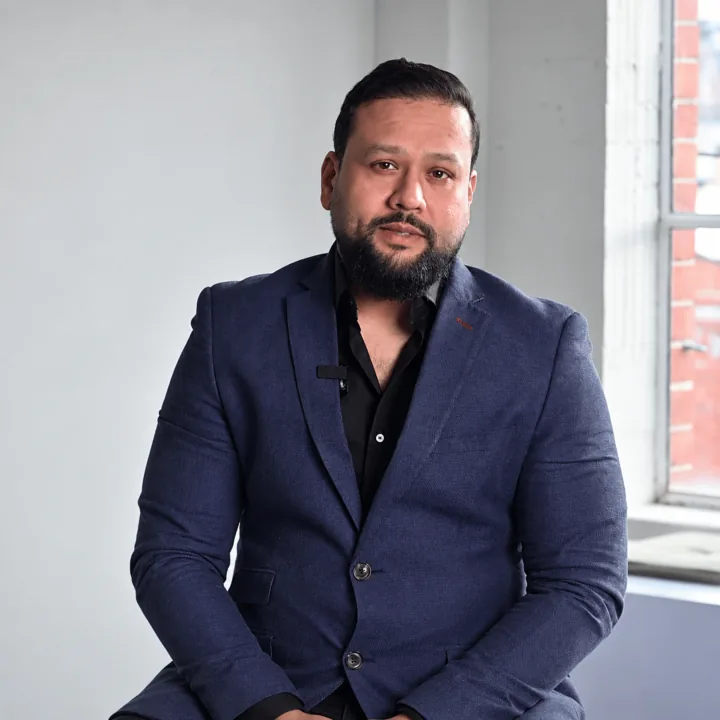
Faisal Hameed spent about five years in IT, latterly as an IT business analyst — his last role at the ACCC, in their Consumer Data Right division. He had also spent years in direct and B2B sales, for brands including Origin Energy, Lumo Energy, Telstra, Dell and Lenovo.
Most people who work in technology have one of those halves. He had both: the commercial operation customers deal with, and the systems running quietly behind it.
That is an unusual place to stand, and it is where GladiuxTech came from.
I've acquired the front-end retail knowledge of business operations, and also understanding of the technical systems that works in the background.
Six to eight tools, and the day disappears
Managed IT is a crowded market, and Hameed's problem with it was not competitive. It was structural.
A traditional MSP engineer works across six to eight different segmented tools to close a single ticket. None of them talk to each other, so the work between them — copying, pasting, reconciling — is done by a person.
He describes it as an operational bottleneck, and he is clear about why it mattered to him specifically: you cannot be top-tier at cybersecurity and also spend most of the day on data entry.
The traditional managed IT model is structurally inefficient. We have six to eight different segmented tools that the engineers use on a daily basis in order to complete a ticket, for example. And they spend around sixty percent of their time in just admin stitching up data from one tool to other.
AI as a harness, not an add-on
The obvious move is to buy an AI product and bolt it onto the existing stack. He did the opposite, and it is the decision the company rests on.
The harness does the stitching. What it collects, it processes — for ticketing, and for monitoring his clients' IT operations. The engineers stop being the integration layer.
So we built GladiuxTech as an AI-native MSP from ground up, and we use AI as a harness to connect these six disconnected legacy tools to collect data from all of them into one harness and to process them.
Enterprise-grade, at a price an SMB can carry
The point of removing that work is not tidiness. It is what it does to the economics.
“The primary benefit is operational leverage because AI handles the repetitive administrative load. We can confidently manage a broad spectrum of office businesses without proportionally scaling our internal headcount.”
That leverage is what lets a small Melbourne firm buy something it normally cannot. His customers are professional offices — medical centres, law firms, accounting firms, and the back office of a warehouse — and the standard he holds himself to is the one their much larger neighbours are used to.
As he puts it elsewhere: the niche is broad, but the value is very specific — keeping these businesses secure, compliant and operational.
This means we can deliver enterprise-level compliance and security, the kind that was reserved for large corporations at a price point that makes financial sense for local SMBs.
Twenty-three versions of one customer
Hameed came to the SMEC AI Pathfinder program with a working model and a wide target. Eight weeks of workshops and office hours — about sixteen sessions — went at both.
“The Pathfinder program is a highly structured environment to stress test my business idea and my operational model.”
The number he volunteers is the ideal customer profile. He rewrote it twenty-three times, at least. Alongside that he interviewed around eighty other founders — different startups, different problems — and asked them to be hard on him.
The program also came with $2,500 of OpenAI API credits and a year of GitHub Enterprise.
I had a chance to interview around 80 different founders from different startups building different things, and learn from everybody, and get brutal feedback from everybody. That was hands-on and very valuable that I couldn't have gotten from a different place.
What GladiuxTech is building next
The harness solves his own operational problem. The longer bet is that every other managed service provider has the same one.
He is candid about the order of operations: scale the MSP first, and build the platform out of what that teaches him. A pre-seed round for Gladiux OS is under way, and GladiuxTech is onboarding its first customers.
Our long-term vision is to build a Gladiux OS, which is an AI-native operating system, a SaaS platform for other managed service providers out there that stitches all these six to eight segmented tools into one AI-native platform.